Understanding accede meaning is more than just expanding vocabulary it helps you sound polished, professional, and confident in both writing and conversation.
While slang and abbreviations dominate modern texting, formal words like accede still show up in emails, academic writing, and professional chats.
In a world where communication styles shift faster than trending memes, knowing words like accede gives you an edge.
This guide breaks down everything you need to know about accede meaning, how to use it correctly, and how it fits into modern language.
Updated for 2026, this is your go-to resource for mastering the word like a pro.
What Does “Accede” Mean? (Definition & Origin)
The word accede means:
To agree to a request, demand, or proposal; or to assume a position or office.
In simple terms, when someone accedes, they are saying “yes”—but in a formal or respectful way.
📜 Origin of the Word
- Derived from Latin “accedere”, meaning “to approach or agree.”
- Entered English through Old French influence.
- Commonly used in formal writing, law, politics, and diplomacy.
💡 Easy Explanation
Think of accede as the “official yes.”
Instead of casually saying:
- “Okay, sure.”
You might say:
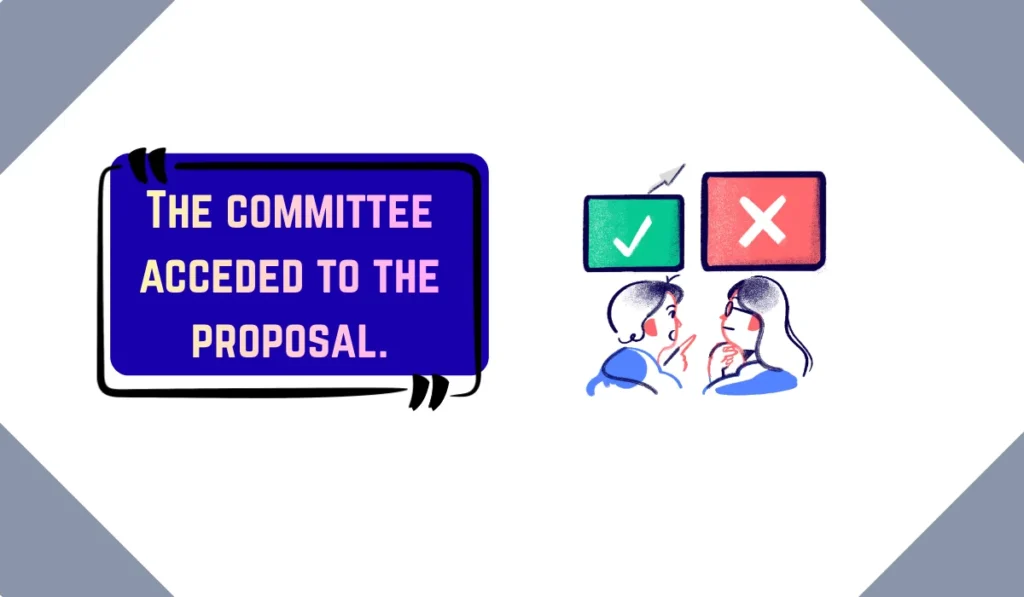
- “The committee acceded to the proposal.”
How to Use “Accede” in Texts or Chat
While accede isn’t common in casual texting (like “lol” or “brb”), it can still appear in more serious or semi-formal conversations.
🧠 When to Use It
Use accede in situations like:
- Professional emails
- Academic writing
- Business communication
- Legal or official discussions
- Formal online discussions (LinkedIn, forums, etc.)
✍️ Sentence Structure
- Accede to + request/demand/proposal
- Accede to + position/authority
🔥 Examples:
- “The manager acceded to the client’s request.”
- “She acceded to the role of team leader.”
- “They finally acceded to our proposal after several meetings.”
💡 Pro tip: If your message feels like a business suit, accede fits perfectly.
Examples of “Accede” in Conversations
Let’s make this more relatable with real-life scenarios.
🗣️ Example 1: Work Chat
You:
“We’ve reviewed the changes. Can you approve them?”
Boss:
“Yes, I accede to the revised plan.”
👉 Translation: “I agree to it.”
🗣️ Example 2: Academic Context
Student:
“Will the professor accede to the extension request?”
👉 Meaning: Will the professor accept or approve it?
🗣️ Example 3: Formal Group Decision
“After discussion, the committee acceded to the new policy.”
👉 Meaning: They agreed to implement it.
🗣️ Example 4: Friendly but Formal Tone
Instead of:
- “I agree with you.”
You could say:
- “I accede to your point.”
👉 Sounds more polished, slightly dramatic, and very “top-tier vocabulary energy.”
Common Mistakes or Misunderstandings
Even strong writers get tripped up by accede meaning. Here are the most common mistakes:
❌ 1. Confusing with “Exceed”
- Accede = agree
- Exceed = go beyond
👉 Example:
- Wrong: “I will exceed to your request.”
- Correct: “I will accede to your request.”
❌ 2. Using It in Casual Slang Chats
Avoid using accede in casual texting like:
- “Hey bro, I accede to your plan 😂”
👉 Sounds unnatural and overly formal.
❌ 3. Missing the Preposition “To”
Incorrect:
- “She acceded the request.”
Correct:
- “She acceded to the request.”
❌ 4. Thinking It Means “Refuse”
Remember:
- Accede = agree
- Not deny, reject, or ignore
Related Slangs or Formal Alternatives
If accede feels too heavy, here are similar words and alternatives:
🔁 Formal Synonyms
- Agree
- Consent
- Approve
- Accept
- Comply
💬 Informal Alternatives (Chat-Friendly)
- “Cool”
- “Okay”
- “Sure”
- “Got it”
- “Sounds good”
🧩 Slightly Advanced Synonyms
- Concur
- Assent
- Yield
- Grant approval
👉 SEO Tip: Use variations like “accede synonym”, “accede meaning in English”, and “what does accede mean” to capture search traffic.
Where You’ll Commonly See “Accede”
Understanding where accede shows up helps you recognize it in the wild.
📍 Common Contexts:
- Legal documents
- Government and politics
- Academic papers
- Formal business emails
- Diplomatic discussions
- News articles
🌐 Example (Real Usage Style)
“Following negotiations, both parties acceded to the agreement.”
👉 This is typical in news or official reporting.
Why Knowing “Accede Meaning” Matters
Even if you don’t use it daily, understanding this word gives you:
- Stronger reading comprehension
- Better professional writing
- Improved vocabulary for exams (IELTS, TOEFL, etc.)
- Confidence in formal communication
- A sharper, more credible tone
💡 Think of it as upgrading from “basic mode” to “pro mode” in language skills.
Quick Usage Guide (Cheat Sheet)
- Use when agreeing formally
- Pair with “to” (accede to)
- Avoid in casual slang chats
- Ideal for professional or academic writing
- Synonyms: agree, consent, approve
FAQs About “Accede Meaning”
1. What does accede mean in simple words?
It means to agree to something, usually in a formal way.
2. Is accede a formal or informal word?
It is a formal word used in professional, legal, or academic contexts.
3. How do you use accede in a sentence?
Example: “The company acceded to the client’s request.”
4. What is the opposite of accede?
Opposites include: refuse, reject, deny, decline.
5. Can accede be used in texting?
Technically yes, but it sounds too formal for casual texting.
6. What is a synonym for accede?
Common synonyms: agree, approve, consent, accept.
7. What preposition is used with accede?
Always use “to” → accede to a request.
8. Is accede commonly used today?
Yes, but mostly in formal writing rather than everyday speech.
Conclusion
The accede meaning revolves around a simple yet powerful idea: agreeing to something in a formal or respectful way.
While it may not appear in everyday texting, it plays an important role in professional, academic, and official communication.
Mastering words like accede helps you elevate your language, improve clarity, and stand out in written communication.